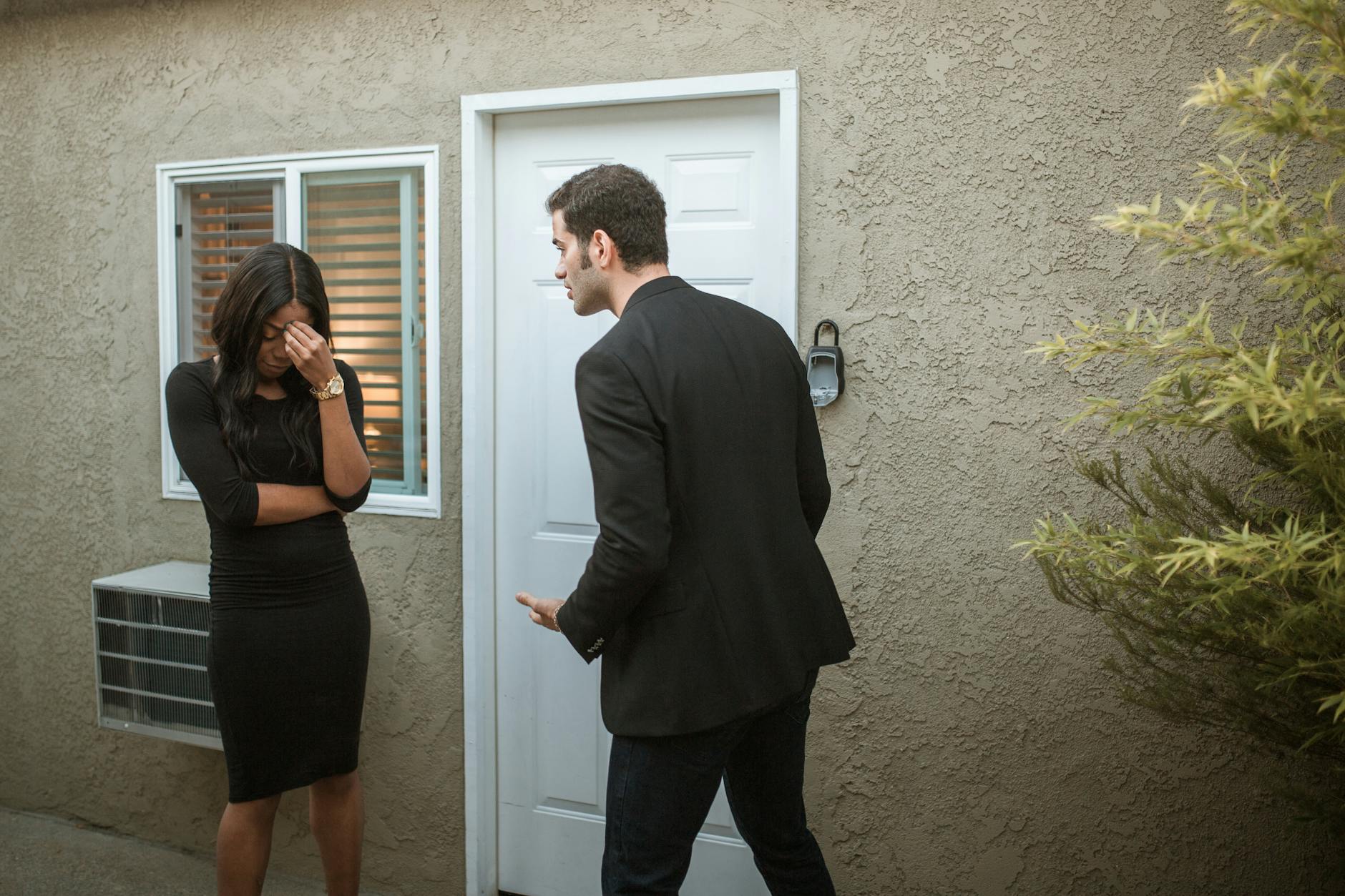
The truth about why you are scared of commitment is that your brain is currently prioritizing self-preservation over the potential rewards of a deep emotional connection. This fear is not a personality flaw but a sophisticated defense mechanism designed to protect you from the perceived risks of vulnerability, loss of autonomy, or past emotional pain. By understanding the psychological architecture of this fear, you can finally dismantle the walls holding you back from the most exciting adventure of your life.
The Biological Blueprint of Your Run-Away Reflex
When the prospect of a serious relationship looms, your nervous system may react as if you are facing a physical threat. The amygdala, the brain’s alarm center, can trigger a fight-or-flight response when someone gets too close, interpreting intimacy as a potential trap. This biological reaction often happens before you even have a conscious thought about the person you are dating.
For many, this physiological surge feels like “cold feet” or a sudden loss of interest, but it is actually your body trying to maintain its current state of safety. Evolutionarily, staying independent meant you were less likely to be dragged down by the needs of others, yet modern survival thrives on cooperation and bonding. Understanding that your heart rate and anxiety are just biological signals can help you stay grounded when you feel the urge to bolt.
This biological wiring is often reinforced by our early environments, creating a feedback loop that makes commitment feel dangerous. If you grew up in an environment where emotions were volatile, your brain learned to associate closeness with chaos. As an adult, your subconscious might still be operating on that outdated software, trying to keep you safe from a storm that isn’t actually there.
Detailed information: The One Thing You’re Doing WRONG That’s Making Fights WORSE
Attachment Theory: The Invisible Script of Your Love Life
One of the most profound reasons for commitment phobia lies in your attachment style, a psychological framework developed in infancy. If you have an avoidant attachment style, you likely view yourself as independent and self-sufficient, often at the expense of emotional depth. To you, commitment feels like a heavy weight that threatens to crush your carefully constructed sense of self.
There is also the fearful-avoidant style, where you desperately crave intimacy but are simultaneously terrified of it. This creates a painful “push-pull” dynamic where you draw people in only to push them away the moment things become real. Recognizing these patterns is like finding a map of a maze you have been stuck in for years.
- Dismissive-Avoidant: You prioritize your freedom above all else and view others’ needs as intrusive or demanding.
- Fearful-Avoidant: You want love but assume it will lead to betrayal, causing you to sabotage relationships early on.
- Anxious-Preoccupied: While usually seeking commitment, you may fear it because you worry your partner will eventually leave you.
These scripts run in the background of every interaction, influencing who you choose and how you react to their affection. If you find yourself consistently attracted to “emotionally unavailable” people, it might be because they feel safe to your avoidant side. Since they won’t demand commitment, you never have to face your fear of actually giving it.
The Myth of the Golden Cage: Why You Fear Losing Freedom
A massive driver of commitment fear is the misconception that a serious relationship is the end of your personal identity. You might imagine that saying “I do” or moving in together means you can no longer pursue your hobbies, travel, or maintain your friendships. This “Golden Cage” syndrome makes the idea of a long-term partner feel like a life sentence rather than a life enhancement.
In reality, a healthy commitment acts as a secure base that allows you to explore the world with even more confidence. When you have a partner who supports your growth, your world actually expands rather than shrinks. The fear of losing your freedom is often a fear of not being able to set healthy boundaries within a relationship.
Consider the possibility that your definition of commitment is based on outdated or unhealthy models you saw growing up. If your parents’ relationship was a source of constant sacrifice and misery, it makes sense that you would want to avoid that fate. However, you have the power to define what commitment looks like for you, ensuring it includes plenty of room for your individual spirit.
The Paradox of Choice and the “Perfect Partner” Fallacy
In the age of dating apps and infinite scrolling, the fear of commitment is often fueled by the belief that someone better is just one swipe away. This is known as the paradox of choice, where having too many options leads to anxiety and an inability to commit to any single one. You might find yourself nitpicking a partner’s minor flaws as a way to justify moving on to the next potential candidate.
The search for a “perfect” partner is frequently a subconscious shield against real intimacy. By setting an impossible standard, you ensure that no one will ever meet it, thus protecting yourself from the vulnerability of a real relationship. It is an exciting but dangerous game that keeps you in a state of perpetual searching and perpetual loneliness.
| Fear-Based Thought | The Reality of Commitment |
|---|---|
| I will lose my independence. | A partner provides a support system for your goals. |
| I will get bored with one person. | Deep intimacy offers endless layers of discovery. |
| They will eventually leave me. | True commitment is built on shared trust and effort. |
| I have to give up my hobbies. | Healthy relationships encourage individual passions. |
| The passion will die out. | Commitment allows for a deeper, more stable passion. |
When you realize that every human being has flaws, the pressure to find the “unicorn” disappears. Commitment is not about finding someone who never annoys you, but about choosing someone whose brand of “annoying” you actually enjoy. Shifting your focus from perfection to compatibility can take the edge off your fear and make the process exciting again.
Relevant guide: They’re Impossible! How to Handle People You Can’t Stand
Past Trauma and the Ghost of Heartbreaks Past
Sometimes, the reason you are scared of commitment is that you are still haunted by a previous relationship that left you shattered. If you gave your all to someone who betrayed your trust, your brain has categorized commitment as a high-risk, low-reward endeavor. This is a form of emotional post-traumatic stress that keeps you in a defensive crouch.
Even micro-traumas, like being ghosted or feeling misunderstood in several short-term relationships, can accumulate into a massive wall of fear. You start to believe that the pain of loss is inevitable, so you decide to never fully show up in the first place. You are essentially trying to win a game by refusing to play, which only results in a different kind of loss.
See also: 5 Little Lies You Tell Yourself About Dating (Stop It!)
Healing involves acknowledging that your past does not have to be your prologue. Just because one person was unable to handle your heart does not mean everyone else will be equally careless. Reclaiming your power means realizing that you are now more resilient and better equipped to handle the ups and downs of love than you were before.
The Fear of Being “Found Out”: Vulnerability and Shame
Deep down, many people who fear commitment are actually terrified that if someone truly knew them, they would be rejected. This is the fear of being “found out” as inadequate, boring, or broken. Commitment requires a level of transparency that can feel incredibly threatening if you struggle with low self-esteem or hidden shame.
You might use a persona of being “the cool, unattached one” to keep people at a distance so they never see the real you. This mask protects you from rejection, but it also prevents you from being truly loved, as you cannot be loved for who you are if you never show it. True intimacy is the process of being seen and accepted, flaws and all, which is both terrifying and incredibly healing.
Hypothetically, imagine a man named Mark who always ends relationships at the three-month mark. He tells himself he just hasn’t found “the one,” but the truth is that three months is when the mask starts to slip. By ending things early, Mark never has to face the possibility that a partner might see his insecurities and stay anyway. Breaking this cycle requires Mark to stay in the discomfort of being seen, even when every instinct tells him to run.
The Exciting Reality of Emotional Maturity
Overcoming the fear of commitment is one of the most empowering things you can do for your personal evolution. It signals a shift from living in a state of reaction to living in a state of intention. When you decide to commit, you are not giving up your power; you are choosing where to invest it for the highest possible return.
Think of commitment as a high-performance vehicle for your personal growth. It forces you to develop communication skills, empathy, and patience in ways that a solo life simply cannot. The excitement of a long-term relationship doesn’t come from the absence of fear, but from the courage to build something meaningful in spite of it.
As you begin to lean into commitment, you will find that the anxiety that once paralyzed you starts to transform into a sense of deep security. You no longer have to wonder if you are enough or if you will be alone forever. You have a teammate, a confidant, and a witness to your life, which is a far more thrilling prospect than a lifetime of first dates.
How to Start Dismantling the Fear Today
You don’t have to jump into a marriage proposal tomorrow to start working on your commitment issues. The key is to take small, manageable steps that prove to your nervous system that intimacy is safe. Start by being more present in your current interactions and resisting the urge to check out when things get slightly emotional.
Communication is your greatest tool in this process. If you are dating someone, be honest about your fears instead of just disappearing. You might say, “I really like where this is going, but sometimes I get overwhelmed by the idea of the future; I’m working on it because I value you.” This honesty builds trust and takes the pressure off both of you.
Next article: Why Your Friends Secretly Think You’re Annoying (And How to Stop)
- Self-Reflection: Journal about what you think you will lose if you commit and challenge those assumptions.
- Set Boundaries: Learn that you can say “no” within a relationship, which will make the idea of commitment feel less like a trap.
- Celebrate Wins: Acknowledge the moments when you stayed present instead of withdrawing.
Remember that your fear is just a story your brain is telling you to keep you in the “known” zone. But the “known” zone is often where growth goes to die. By stepping into the unknown of commitment, you are opening the door to a level of joy and fulfillment that your fear-based brain can’t even imagine yet.
Embrace the Adventure of Connection
The truth about why you’re scared of commitment is that you are standing on the edge of something great, and your ego is trying to keep you small. Commitment is the ultimate act of bravery in a world that often encourages us to remain disconnected and cynical. It is an invitation to write a new story where you are the hero who chose love over fear.
Imagine the life you could have if you were no longer running. Imagine the depth of conversation, the shared laughter, and the quiet comfort of being truly known by another human being. This is not a cage; it is a launchpad for everything you want to achieve. The fear may never fully disappear, but it no longer has to be the one driving the car.
Take a deep breath and realize that you are capable of handling whatever comes your way. You are stronger than your past, wiser than your fears, and more than ready for the incredible journey of a committed life. The world is waiting for you to show up fully, and the rewards for doing so are beyond anything you have ever experienced.
Frequently Asked Questions
Can I ever truly get over my fear of commitment?
Is being scared of commitment the same as not loving someone?
How do I know if I’m with the wrong person or just scared?
Does commitment mean I have to change who I am?